







Met Police Mobilises Massive Police Presence for Dual London Protests
London, UK – On a day marked by heightened public interest and political tension, the Metropolitan Police announced a comprehensive security operation involving more than 4,000 officers and a fleet of armoured vehicles. The deployment is aimed at managing two major public gatherings taking place in the capital on the same day: the “Unite the Kingdom” rally in central London and the annual Nakba march, a commemoration organised by Palestinian solidarity groups.
The scale of the police response reflects the Metropolitan Police Service’s (MPS) assessment of potential risks associated with the convergence of large crowds, differing political messages, and the heightened possibility of public disorder. By positioning armoured personnel carriers (APCs) and crowd‑control units at strategic points across the city, the MPS seeks to ensure the safety of demonstrators, residents, and businesses while maintaining the right to peaceful assembly under British law.
Background to the Dual Demonstrations
The “Unite the Kingdom” rally, scheduled for central London’s West End, has been billed by its organisers as a large‑scale celebration of British unity and a response to recent debates surrounding national identity, immigration policy, and the aftermath of the United Kingdom’s departure from the European Union. Prominent political figures, community leaders, and a coalition of civil‑society groups have been invited to speak at the event, which is expected to attract tens of thousands of participants.
Meanwhile, the Nakba march marks the annual remembrance of the 1948 displacement of Palestinians, an event referred to by many as the “Nakba,” meaning catastrophe in Arabic. The march typically starts in central London before moving towards Parliament Square, where speakers address topics ranging from human rights violations to calls for a two‑state solution. The event has a long history of attracting both supporters and counter‑protesters, which has often resulted in heightened police monitoring.
Security Preparations and Resources Deployed
According to official statements released by the Metropolitan Police, the operational plan includes:
- More than 4,000 police officers deployed across the city, including officers from the Specialist Operations (SO19) firearms unit, public order units, and community policing teams.
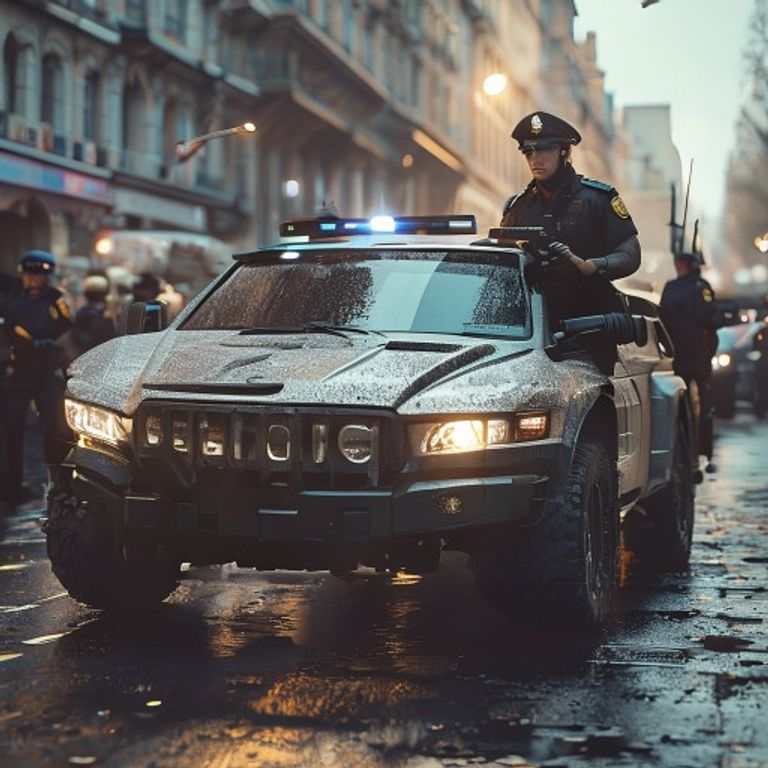
- A fleet of armoured personnel carriers and tactical vehicles positioned at high‑risk locations, notably around Parliament Square, Westminster Bridge, and the main thoroughfares leading to the rally venue.
- Deployment of mobile command units equipped with real‑time video surveillance, crowd‑density analytics, and communication links to national security agencies.
- Enhanced public transport monitoring, with additional staff at key Underground stations and bus routes to assist commuters and manage potential disruptions.
- Pre‑emptive street closures, barrier installations, and the establishment of controlled entry points to channel demonstrators away from sensitive areas.
Chief Superintendent Hannah McLoughlin, who heads the Public Order Command Unit, stressed that the presence of armoured vehicles is a precautionary measure intended to protect both officers and the public in the event of escalation. “Our primary goal is to facilitate the peaceful exercise of democratic rights while ensuring that any unforeseen incidents can be managed swiftly and safely,” she said.
Community Reactions and Concerns
While many supporters of the “Unite the Kingdom” rally have welcomed the visible police presence as a sign of safety, civil‑rights organisations have raised concerns about the optics of deploying militarised equipment in a democratic society. Liberty, a UK human‑rights charity, issued a statement urging the police to balance security needs with the preservation of civil liberties. “Armoured vehicles and a high‑visibility police presence can be intimidating and may suppress lawful expression,” the statement read.
Similarly, representatives from Palestinian advocacy groups expressed apprehension that the heavy police presence could stifle the Nakba march. Omar Al‑Sabbagh, a spokesperson for the London Palestinian Solidarity Network, said, “We respect the right to protest, but we fear that an overwhelming police show of force could lead to unnecessary confrontations and limit our ability to speak out on human‑rights issues.”
Legal Framework and Police Powers
The Metropolitan Police’s actions are grounded in the Police and Criminal Evidence Act 1984 (PACE) and the Public Order Act 1986, which grant law‑enforcement agencies the authority to impose conditions on public assemblies when there is a risk to public safety. Additionally, the Police, Crime, Sentencing and Courts Act 2022 expanded police powers to impose restrictions on protests that may cause serious disruption to transport networks or pose a threat to national security.
Under these statutes, the MPS can issue Notices of Attendance, impose on‑site restrictions, and, if necessary, use proportionate force to disperse crowds that become violent or threaten the safety of others. The police have also coordinated with the National Counter Terrorism Policing Network to monitor any intelligence indicating potential extremist activity linked to either demonstration.
Impact on Traffic and Public Services
London’s Transport for London (TfL) has announced temporary alterations to bus routes and additional service suspensions on the Underground’s Circle and District lines during peak protest hours. Commuters are advised to plan alternative routes and expect delays of up to 30 minutes in the affected zones. TfL has also deployed additional staff at key stations to provide real‑time information and assist passengers with rerouting.
Local businesses, particularly those in the West End, have been urged to prepare for possible disruptions. The London Chamber of Commerce released guidance encouraging retailers to secure premises, adjust opening hours if necessary, and maintain open lines of communication with the police liaison officers assigned to their districts.
What Residents and Protesters Can Expect
Authorities have outlined a set of recommendations for both residents and demonstrators to ensure a smooth and safe day:
- Stay Informed: Follow official Met Police updates, TfL alerts, and local council announcements via verified social media channels and news outlets.
- Plan Ahead: Allow extra travel time, use alternative routes, and consider walking or cycling where possible.
- Follow Police Instructions: Respect barrier placements, comply with directions from officers, and avoid confronting law‑enforcement personnel.
- Maintain Peaceful Conduct: Refrain from provocative language or actions that could be interpreted as incitement.
- Report Incidents: Use the non‑emergency 101 line or the police mobile app to report suspicious activity or emergencies.
Both protest organisers have been asked to submit detailed itineraries and risk assessments to the Metropolitan Police ahead of the events. The “Unite the Kingdom” coordination team has confirmed compliance, while the Nakba march organisers have pledged to cooperate fully with security officials to minimise the risk of clashes.
Potential Outcomes and Historical Context
London has a long history of hosting large‑scale demonstrations, from the anti‑war protests of the early 2000s to the Climate Strike movements in recent years. While most events proceed without major incident, instances of friction—such as the 2019 anti‑Eurovision rally and the 2020 Black Lives Matter marches—have prompted the police to refine crowd‑control tactics and communication strategies.
Analysts suggest that the simultaneous nature of the two events could either lead to a coordinated peaceful coexistence or increase the likelihood of flashpoints, especially if counter‑protesters converge on the same routes. Security experts from the Institute of Conflict Management note that clear signage, transparent policing policies, and ongoing dialogue with community leaders are critical to preventing escalation.
Conclusion: Balancing Security and Democratic Rights
The Metropolitan Police’s deployment of over 4,000 officers and armoured vehicles underscores the complexity of managing multiple high‑profile public gatherings in a densely populated metropolis. As London prepares for a day of vibrant civic expression, the challenge remains to safeguard public order while upholding the democratic principles that enable citizens to voice their views. The effectiveness of the police operation will likely be judged not only by the absence of violence but also by the degree to which it respects the rights of peaceful demonstrators and the broader community.