









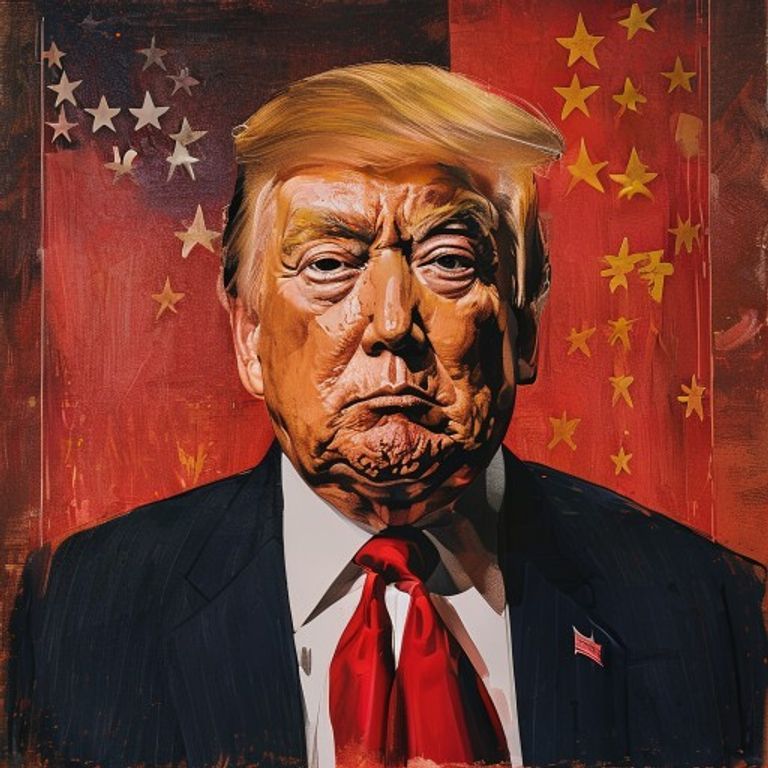
Donald Trump’s Beijing Visit: What’s on the Agenda?
Former President Donald J. Trump’s unexpected trip to Beijing has captured the attention of global audiences, analysts, and policymakers alike. While the United States and China have a complex, often contentious relationship, the agenda of this high‑profile meeting could have far‑reaching implications for trade, security, technology, and diplomatic ties. In this comprehensive analysis, we break down the most likely discussion points, explore the historical context, and assess the potential outcomes for both nations and the broader international community.
Laura Bicker, a senior correspondent with extensive experience covering US‑China relations, provides a detailed overview of the topics expected to dominate the talks between Trump and Chinese President Xi Jinping. Her insights draw on official statements, past diplomatic engagements, and the current geopolitical climate, offering readers a clear understanding of why this meeting matters and what to watch for in the weeks ahead.
Historical Background of US‑China Relations
The United States and China have navigated a tumultuous relationship for decades, marked by cooperation in areas such as climate change and public health, alongside rivalry in trade, technology, and military influence. Key milestones include the 1972 Nixon‑Mao diplomatic thaw, China’s accession to the World Trade Organization in 2001, and the trade wars of the 2010s under the Trump administration.
During his presidency, Trump imposed tariffs on hundreds of billions of dollars in Chinese goods, citing unfair trade practices and intellectual‑property theft. In response, China imposed retaliatory tariffs and limited access to its market for certain American firms. The two sides eventually signed a “Phase One” trade agreement in January 2020, which promised increased Chinese purchases of US agricultural products and a commitment to reform certain trade barriers. However, many of the deeper structural issues—such as forced technology transfers, state subsidies, and market access restrictions—remained unresolved.
Key Topics Likely to Dominate the Beijing Talks
1. Trade and Economic Cooperation
Trade is expected to dominate the agenda, with both leaders seeking to address lingering tariff disputes and explore new opportunities for bilateral commerce. Trump is likely to press for a complete removal of remaining Chinese tariffs on American goods, arguing that the Phase One deal was only a starting point. Conversely, Chinese officials will aim to protect their domestic industries while seeking concessions that could open the US market to Chinese technology firms.
Potential discussion points include:
- Negotiating a roadmap for lifting the remaining US tariffs on Chinese imports.
- Assessing Chinese compliance with the purchase commitments outlined in the Phase One agreement.
- Exploring joint ventures in sectors such as renewable energy, infrastructure, and agriculture.
Economic analysts suggest that any progress will hinge on both sides’ willingness to move beyond tit‑for‑tat tariff politics and focus on long‑term market stability.
2. Technology and Intellectual Property
The technology rivalry between the two superpowers has intensified over the past five years, especially regarding 5G networks, semiconductor supply chains, and artificial intelligence. Trump is expected to demand stronger protections for American intellectual property and push for the removal of export controls that limit US firms’ ability to sell advanced components to Chinese manufacturers.
Key sub‑topics may include:
- Establishing mutually acceptable rules for the export of semiconductor equipment.
- Creating a joint task force to combat cyber‑espionage and IP theft.
- Discussing the future of Chinese tech giants like Huawei and ZTE in the US market.
A breakthrough in this area could ease tensions in the broader tech sector, but skepticism remains high on both sides.
3. Climate Change and Energy Collaboration
Climate change presents a rare window for cooperation. Both the United States and China are the world’s largest greenhouse‑gas emitters, and joint action is essential to meet the Paris Agreement targets.
Trump may use the Beijing visit to propose a renewed bilateral climate pledge, focusing on:
- Co‑funding research into carbon‑capture technologies.
- Coordinating the rollout of renewable‑energy projects in developing regions.
- Sharing best practices for electric‑vehicle infrastructure.
While Trump’s previous administration rolled back several domestic climate initiatives, the diplomatic leverage of a high‑profile meeting could generate momentum for renewed joint commitments.
4. Security and Regional Stability
The Indo‑Pacific region remains a flashpoint for US‑China strategic competition. Issues such as Taiwan’s status, the South China Sea disputes, and North Korea’s nuclear program are likely to surface during the talks.
Trump may adopt a more conciliatory tone than his predecessors, proposing confidence‑building measures such as:
- Establishing a direct military hotline to prevent accidental encounters.
- Agreeing on protocols for freedom of navigation operations.
- Discussing a joint framework for handling North Korean denuclearization.
Any agreement on these matters would signal a marked shift toward diplomatic de‑escalation and could reduce the risk of miscalculations in the region.
5. Human Rights and Governance
Human‑rights concerns, especially regarding Hong Kong, Xinjiang, and broader civil‑society restrictions, have historically been a point of friction. While Trump’s previous administration took a relatively muted approach compared to later U.S. governments, the issue may still appear on the table, particularly if Chinese officials seek to pre‑empt further sanctions.
Potential outcomes include:
- A mutual agreement to postpone new sanctions in exchange for limited transparency measures.
- Joint statements emphasizing the importance of sovereign governance while acknowledging international concerns.
Negotiating this delicate balance will test both leaders’ diplomatic flexibility.
What This Meeting Means for Global Markets
Financial markets have reacted to the announcement of Trump’s Beijing visit with heightened volatility. Investors are closely monitoring any hints of tariff reductions, technology‑sector agreements, or geopolitical de‑escalation, as these could influence equities, commodities, and currency valuations worldwide.
Historically, US‑China diplomatic breakthroughs have led to short‑term rallies in risk‑on assets, while heightened tensions have sparked flight‑to‑safety flows into gold and the Japanese yen. The outcome of this meeting could therefore set the tone for market sentiment throughout the fourth quarter of 2024 and beyond.
Potential Scenarios and Their Implications
Scenario A – Comprehensive Trade Reset
If Trump secures a full removal of Chinese tariffs and China agrees to lift remaining barriers on US firms, global supply chains could stabilize, fostering a resurgence in manufacturing and export activity. This would likely boost US agricultural exports, improve profitability for multinational corporations, and reduce inflationary pressures linked to import costs.
Scenario B – Stalemate on Core Issues
Should negotiations stall over technology controls and human‑rights sanctions, the status quo could persist, prolonging the trade‑war environment. In this case, companies may continue to diversify supply chains away from China, accelerating reshoring trends but also increasing production costs.
Scenario C – Strategic Cooperation on Security
A breakthrough on confidence‑building measures in the Indo‑Pacific could lower the risk of accidental military clashes. This scenario would likely encourage multinational investors to increase exposure to the region, driving capital inflows into infrastructure projects and defense‑related industries.
Expert Commentary and Outlook
Political analysts note that Trump’s personal diplomatic style—characterized by direct, sometimes confrontational rhetoric—could both facilitate candid dialogue and complicate nuanced negotiations. “The former president’s brand of ‘deal‑making’ often relies on high‑stakes bargaining,” says Dr. Mei Liu, a senior fellow at the Asia‑Pacific Policy Center. “If he can leverage his personal rapport with President Xi to push past entrenched bureaucratic positions, we may see tangible progress. However, the lack of a formal diplomatic apparatus behind him could limit the durability of any agreements reached.”
From a Chinese perspective, President Xi’s willingness to meet with a former adversary suggests a strategic calculation to portray Beijing as open to dialogue, especially as Beijing faces mounting pressure from European allies and domestic economic challenges. “China aims to demonstrate that it can engage constructively with all parties, even those it previously viewed as hostile,” explains Wang Jun, senior analyst at the Beijing Institute of International Studies.
What to Watch in the Coming Weeks
Readers should monitor the following indicators for signs of how the meeting will shape future policy:
- Official joint statements released by the White House and the Chinese Ministry of Foreign Affairs.
- Any immediate adjustments to tariff schedules announced by the US Trade Representative.
- Reactions from key industry groups, especially in technology, agriculture, and energy.
- Statements from allied nations, particularly the European Union and Japan, regarding the broader impact on regional security.
- Market reactions, including shifts in the Shanghai Composite Index, the S&P 500, and commodity price movements.
In conclusion, Donald Trump’s trip to Beijing marks a potentially pivotal moment in US‑China relations. While the exact outcomes remain uncertain, the agenda outlined by Laura Bicker underscores a blend of economic, technological, environmental, and security issues that could reshape the bilateral landscape. Whether this encounter leads to a meaningful reset or merely a diplomatic footnote will depend on the willingness of both parties to make concessions, the support of their domestic constituencies, and the broader geopolitical currents influencing their strategic calculations.