








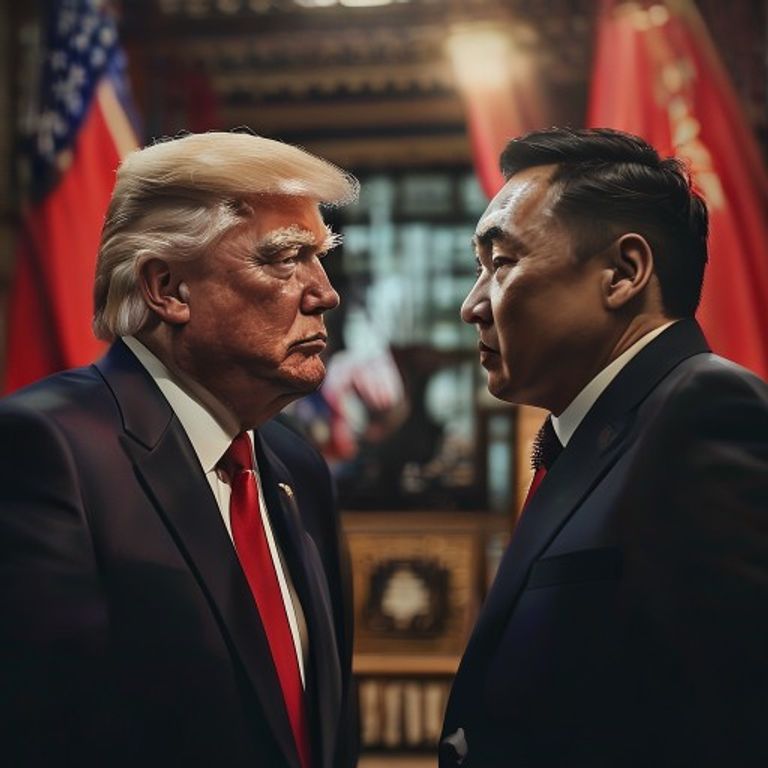
Former U.S. President Donald Trump Arrives in Beijing for Pivotal Two-Day Summit
Former President Donald J. Trump touched down at Beijing Capital International Airport on Tuesday, marking the beginning of a highly anticipated two‑day diplomatic mission to China. The visit, which has been billed as a “high‑stakes” meeting between the two world powers, will see Trump sit down with Chinese President Xi Jinping to discuss a slate of pressing global issues, including the ongoing conflict in Iran, trade tariffs, the rapid development of artificial intelligence, and the volatile status of Taiwan.
Trump’s arrival comes at a time when both Washington and Beijing are under intense scrutiny from domestic and international audiences. In the United States, the former president is gearing up for a potential 2024 presidential campaign, and his foreign policy agenda is already a central theme of his political messaging. In China, President Xi is seeking to reinforce his nation’s role as a stabilizing force in the global economy while navigating the delicate balance of power in the Indo‑Pacific region.
Agenda Highlights: Iran, Tariffs, AI, and Taiwan
Insiders close to the negotiations say the agenda will be broad but focused, with each topic carrying significant geopolitical weight. The war in Iran remains a primary concern, as proxy conflicts and direct confrontations have escalated throughout the Middle East. Both leaders are expected to exchange views on how to de‑escalate tensions, possibly exploring back‑channel communications that could pave the way for a cease‑fire or a negotiated settlement.
Trade tariffs represent another hot button. Since the start of the Trump administration’s “America First” policies, U.S.–China trade relations have been marked by a series of reciprocal tariffs that have impacted everything from agricultural products to high‑tech components. This visit will reportedly assess whether a new framework—potentially a revision of the Phase One trade deal signed in 2020—can be crafted to address lingering grievances while opening pathways for future cooperation.
Artificial intelligence (AI) is rapidly reshaping the economic and security landscapes of both nations. Experts say that a joint declaration on AI standards, data sharing protocols, and ethical guidelines could set a global precedent. Trump, who has previously highlighted the need for American dominance in AI, may use the platform to push for collaborative research initiatives that protect U.S. intellectual property while encouraging joint innovation.
The Taiwan question remains the most sensitive issue on the docket. Xi’s administration views Taiwan as an inseparable part of China, while Washington continues to uphold the Taiwan Relations Act, which commits the United States to assist in Taiwan’s self‑defense. Both leaders are expected to tread carefully, perhaps opting for a “strategic ambiguity” approach that reaffirms each side’s core interests without escalating military posturing.
Historical Context: U.S.–China Relations Under Trump
Donald Trump’s original presidency was defined by a hard‑line stance toward China, characterized by a trade war that saw tariffs climb to over $360 billion in combined duties. The administration also took steps to limit Chinese technology firms, such as Huawei and ZTE, from accessing U.S. markets, citing national security concerns. Despite these confrontational tactics, the Trump era also saw moments of diplomatic engagement, including the historic “Phase One” agreement, which locked in a modest increase in Chinese purchases of American goods.
Since leaving office, Trump has consistently criticized his successor’s approach to China, claiming that the current administration’s “soft” policies have emboldened Beijing’s assertiveness. This narrative is expected to shape his messaging during the Beijing talks, as he may seek to position himself as the only leader capable of confronting Chinese economic and security challenges.
Chinese Perspective: Xi’s Strategic Objectives
For President Xi Jinping, the meetings serve multiple strategic purposes. Domestically, showcasing a willingness to engage with a former U.S. president bolsters his image as a pragmatic statesman who can navigate complex international waters. Internationally, China seeks to mitigate the risk of a new Cold‑War‑style division, especially as it expands its Belt and Road Initiative and deepens ties with Russia.
Xi’s administration is also likely to push for a reduction in U.S. military presence in the Indo‑Pacific, argue for a multilateral approach to AI governance, and advocate for a joint stance on Iran that emphasizes diplomatic dialogue over military intervention.
Potential Outcomes and Global Impact
Analysts outline three primary scenarios that could unfold from the summit:
- Cooperative Breakthrough: The two leaders reach a tentative agreement on trade tariffs, set up a joint AI task force, and issue a joint statement urging restraint in the Iran conflict and across the Taiwan Strait. Such an outcome would be hailed as a diplomatic win and could stabilize markets worldwide.
- Limited Progress: While no major agreements are signed, both sides manage to establish new communication channels, agree on a schedule for future talks, and avoid any public confrontations. This would be seen as a modest, if not spectacular, success.
- Stalled Negotiations: Deep-seated disagreements—especially over Taiwan and Iran—lead to a deadlock, with each side walking away without substantive concessions. The failure could exacerbate existing tensions and fuel speculation about a more confrontational future.
Regardless of the short‑term results, the summit is expected to influence a broad spectrum of global issues, from supply‑chain resilience to the evolving rules governing emerging technologies.
Reactions From Capitol Hill and Global Leaders
In Washington, members of both parties have expressed cautious optimism. Senate Majority Leader Chuck Schumer praised the opportunity for “constructive dialogue,” while Republican Senator Marco Rubio highlighted the need for “strong American leverage” in any agreement. Internationally, the European Union has urged both nations to “avoid escalation” and to “cooperate on AI standards and climate initiatives.”
Human rights organizations, however, remain critical. Amnesty International issued a statement urging the U.S. to link any trade concessions to improvements in China’s treatment of Uyghur Muslims and pro‑democracy activists in Hong Kong.
What to Watch During the Visit
Observers will be monitoring several key indicators:
- Press Releases: Official statements from the White House and the Chinese Foreign Ministry will provide the first clues about any agreements reached.
- Social Media Activity: Both Trump’s own platforms and Chinese state media are expected to broadcast live updates, offering insight into the tone of the discussions.
- Market Movements: Traders will be watching currency fluctuations, especially the yuan‑dollar exchange rate, as well as shifts in commodity prices that could signal market reactions to any trade announcements.
Finally, diplomats will be keen to see whether the two leaders address the broader question of how the United States and China can coexist in a world increasingly defined by competition over technology, security, and economic influence.
Conclusion: A Defining Moment for U.S.–China Relations
Donald Trump’s two‑day visit to Beijing represents a rare convergence of political ambition, strategic necessity, and global stakes. Whether the meetings produce concrete policy shifts or simply serve as a diplomatic signal, the outcomes will reverberate across continents and economies. As the world watches, the dialogue between Trump and Xi could set the tone for how the two superpowers manage conflict, competition, and collaboration in the years ahead.