


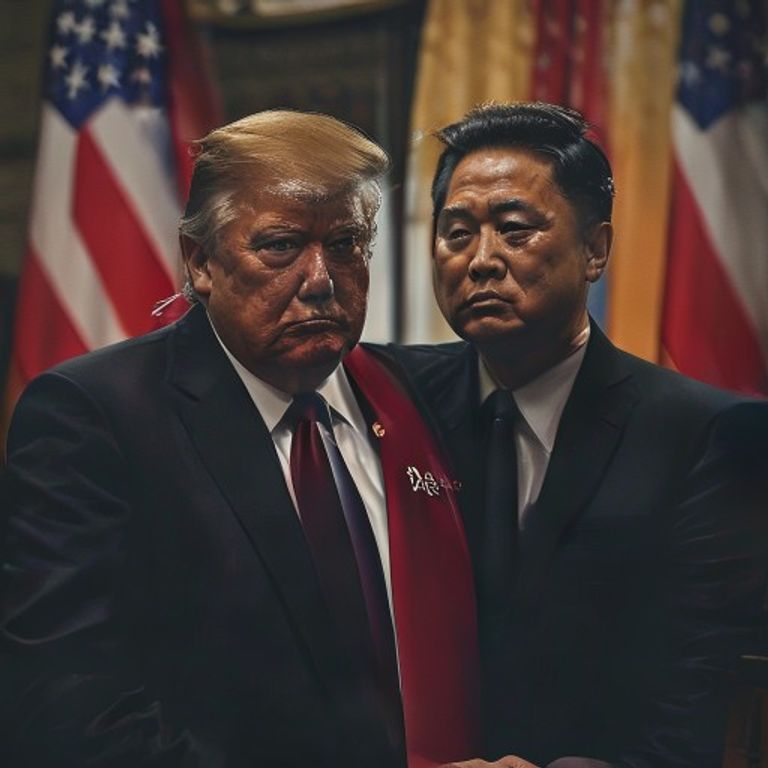
Introduction: A Historic Encounter Between Two Global Leaders
The upcoming summit between former U.S. President Donald Trump and Chinese President Xi Jinping is drawing intense scrutiny from diplomats, analysts, and the general public. While the meeting is unlikely to produce sweeping policy reversals, its symbolic importance cannot be overstated. The gathering will place a spotlight on a range of critical issues – from the ongoing war in Iran and the fragile Taiwan Strait to the rapid evolution of artificial intelligence and deep‑seated trade disputes. Understanding why this summit matters, even if concrete outcomes are modest, helps readers grasp the broader implications for international stability and economic growth.
Contextualizing the Summit: Past Meetings and Current Tensions
Trump and Xi have a complicated history that stretches back to the early days of the Trump administration. Their 2017 meeting in Mar-a-Lago set a tone of personal rapport that contrasted sharply with the more formal diplomatic protocols usually observed between the United States and China. Since then, relations have swung between cooperation on North Korean denuclearization and fierce competition over tariffs, technology bans, and human‑rights concerns.
In the years following the COVID‑19 pandemic, the two countries have faced heightened suspicion. The U.S. has imposed export controls on advanced semiconductors, while China has accelerated its own domestic chip programs. Simultaneously, Beijing’s assertive posturing in the South China Sea and around Taiwan has intensified Washington’s strategic anxieties. Against this backdrop, the Trump‑Xi summit offers a rare opportunity for direct dialogue that sidesteps traditional bureaucratic channels.
Key Agenda Items: Why Each Issue Matters
1. The War in Iran
The conflict in Iran remains a flashpoint for global security. Although the United States and China have historically taken divergent approaches—Washington favoring sanctions and a hard line, Beijing advocating diplomatic engagement—both recognize the destabilizing potential of a protracted war. The summit could serve as a platform for discussing coordinated diplomatic pressure on Tehran, aligning sanction regimes, and preventing a broader regional escalation that could disrupt oil markets and threaten global energy security.
2. Taiwan and Cross‑Strait Stability
Taiwan sits at the heart of U.S.–China rivalry. The United States maintains a policy of “strategic ambiguity,” supplying defensive weapons to Taipei while avoiding explicit commitments to intervene militarily. China, meanwhile, insists on reunification and has not ruled out the use of force. Trump’s previous statements have hinted at a more transactional approach, suggesting possible concessions in exchange for Chinese restraint. Even a modest verbal assurance from Xi could calm market nerves and reassure allies in the Indo‑Pacific.
3. Trade Relations and Economic Interdependence
The trade relationship between the two economic powerhouses remains a tangled web of tariffs, supply‑chain dependencies, and strategic decoupling efforts. While Trump’s presidency was defined by a tariff‑heavy stance, his post‑presidential influence still carries weight among Republican lawmakers. A summit discussion could explore a limited rollback of tariffs on specific sectors—such as agricultural products or consumer electronics—providing a modest boost to U.S. farmers and small businesses that still feel the impact of trade barriers.
4. Artificial Intelligence and Emerging Technologies
Artificial intelligence (AI) is perhaps the most consequential battleground for future economic supremacy. The United States leads in AI research and venture capital, while China rapidly scales its AI deployment across surveillance, commerce, and national defense. The summit may address the need for international standards on AI ethics, data privacy, and export controls. A joint statement on responsible AI development could lay groundwork for future cooperation and mitigate the risk of an uncontrolled technology race.
Why Modest Expectations Are Realistic
Several factors temper expectations for transformative agreements:
- Political Constraints: Trump no longer holds an official office, limiting his ability to bind the United States to new commitments. Likewise, Xi must navigate the expectations of the Chinese Communist Party’s leadership, which prioritizes long‑term strategic goals over short‑term diplomatic gestures.
- Domestic Pressures: Both leaders face intense scrutiny at home. In the United States, the upcoming midterm elections make any perceived concession to China politically dangerous. In China, nationalist sentiment and the Party’s emphasis on sovereignty limit flexibility on issues like Taiwan.
- Complex Global Dynamics: Ongoing crises in Ukraine, the Middle East, and climate change require attention from both capitals, leaving limited bandwidth for deep negotiations on any single topic.
Given these constraints, the summit is likely to yield verbal affirmations, limited working groups, and perhaps a joint press release signaling mutual respect rather than a sweeping policy shift.
Potential Positive Outcomes Even Without Major Deals
Even a modest summit can generate several beneficial effects:
- Reduced Market Uncertainty: Financial markets react quickly to signals of diplomatic engagement. A high‑profile meeting can calm investors worried about a sudden escalation over Taiwan or a new wave of trade sanctions.
- Improved Communication Channels: Direct dialogue establishes personal rapport that can be leveraged during crises—mirroring the back‑channel communications that helped defuse the Cuban Missile Crisis.
- Foundation for Future Negotiations: By agreeing to set up joint task forces on AI standards or humanitarian aid in Iran, both sides create a framework for more detailed discussions later.
- Soft Power Benefits: For Trump, the summit reinforces his image as a global deal‑maker, potentially boosting his influence within the Republican Party. For Xi, it demonstrates China’s willingness to engage even with politically contentious figures, showcasing diplomatic maturity.
Implications for Global Stakeholders
Businesses, policymakers, and citizens worldwide should monitor the summit’s outcomes closely. Companies with supply chains that span both economies—particularly in electronics, automotive parts, and agriculture—will look for any hint of tariff adjustments or regulatory alignment. Governments in the Indo‑Pacific will assess whether the summit signals a de‑escalation around Taiwan, influencing defense spending and alliance strategies. Finally, tech firms developing AI applications will watch for any emerging international guidelines that could shape research funding and product rollout.
Conclusion: A Summit Worth Watching, Even if Its Impact Is Subtle
The Trump‑Xi summit may not rewrite the rulebook on U.S.–China relations, but its significance lies in the act of engagement itself. By bringing together two of the world’s most influential leaders, the meeting places critical issues—war in Iran, Taiwan’s security, trade friction, and the AI race—under a shared spotlight. Even modest verbal commitments can lower market volatility, open communication channels, and lay groundwork for deeper collaboration in the future. As the world watches, the summit serves as a reminder that diplomacy, even when modest, remains a vital tool for navigating the complex challenges of the 21st‑century geopolitical landscape.