




Introduction
Recent investigations have confirmed that approximately 11,000 North Korean soldiers were deployed to the front lines of Russia’s war against Ukraine. While the exact number of casualties remains uncertain, a newly unveiled memorial in a remote Russian village hints at a far higher death toll than previously reported. The memorial, consisting of simple stone slabs bearing the names of fallen soldiers, has sparked international debate about the role of the secretive regime in one of Europe’s most devastating conflicts.
Background on the Deployment
Since early 2022, the Kremlin has faced a shortage of manpower as the war in Ukraine escalated. To compensate, Russian authorities turned to a long‑standing but little‑known partnership with the Democratic People’s Republic of Korea (DPRK). Under a series of covert agreements, the North Korean government sent mercenary units—often described as “special forces” or “infantry brigades”—to bolster Russian troops in the Donbas region.
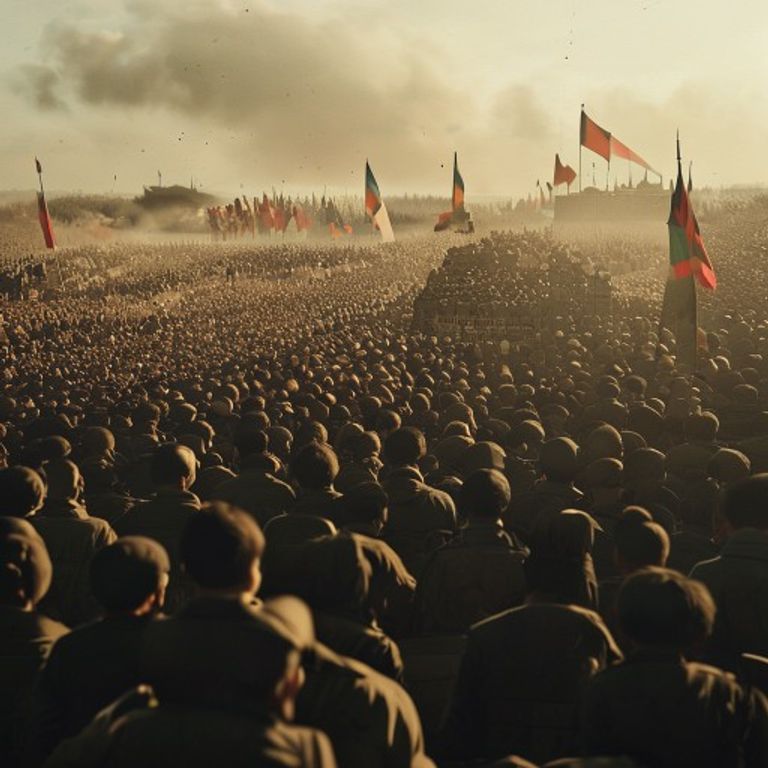
Analysts estimate that up to 11,000 North Korean combatants arrived in Ukraine through a combination of air, rail, and road transport. These soldiers were allegedly equipped with Russian weapons, provided with limited logistical support, and instructed to fight alongside regular Russian units. The deployment was kept deliberately opaque, with the DPRK and Moscow denying any direct involvement for months.
The Memorial’s Discovery
In late April 2024, a group of independent journalists from the investigative outlet “Frontline Watch” arrived in the small village of Zolotoye, located near the front‑line town of Luhansk. While documenting the war’s impact on civilians, they stumbled upon a modest stone memorial set up by local residents. The monument consists of twenty stone slabs, each engraved with a name, rank, and dates of service. The listed names are predominantly Russian, but several entries bear the distinctive Cyrillic spelling of North Korean surnames, such as “Kim Jong‑ho” and “Park Sung‑il.”
Accompanying the memorial is a handwritten note in Russian that reads: “Here lie those who gave their lives for the Motherland. May their sacrifice never be forgotten.” The note, according to locals, was placed by families of the fallen soldiers who returned to Russia after being wounded or killed.
Implications for the Death Toll
The presence of a dedicated memorial suggests that the actual number of North Korean casualties could be significantly higher than the sparse figures released by Russian defense officials. While Moscow has only acknowledged a few dozen foreign volunteers killed in action, the stone slabs in Zolotoye list at least sixteen North Korean names, implying that the death count may already be in the double digits.
Human rights organizations, including the International Federation for Human Rights (FIDH), argue that the memorial provides tangible evidence contradicting official statements. They claim that the lack of transparency not only hides the human cost but also violates international law, as the deployment of foreign mercenaries to a sovereign nation’s territory is prohibited under the United Nations Mercenary Convention.
International Reaction
Western governments have responded swiftly. The United States Department of State issued a statement condemning the “illicit use of North Korean troops in a war that threatens European stability.” The European Union’s High Representative for Foreign Affairs called for an urgent investigation by the United Nations Human Rights Council to determine the scope of the involvement and to hold accountable any parties responsible for war crimes.
Conversely, the Russian Foreign Ministry reiterated its denial of any official partnership with the DPRK. In a press briefing, spokesperson Maria Vasilyeva asserted that “any foreign nationals fighting alongside Russian forces do so voluntarily and are not under the direction of the Russian government.” The North Korean Ministry of Foreign Affairs also released a brief statement denying direct involvement, claiming that “any of our citizens present in the region are there as private individuals without any state endorsement.”
Why North Korea Sent Troops
Several geopolitical analysts have offered explanations for why the isolated regime chose to participate in the conflict. First, the deployment provided a source of hard currency. In exchange for soldiers, the DPRK reportedly received oil, grain, and other essential supplies from Russia, helping to alleviate its chronic shortages caused by sanctions.
Second, the arrangement offered the North Korean military an opportunity to test its troops in a modern combat environment, gaining experience that could be useful for future regional contingencies. Finally, the partnership served as a political gesture of solidarity with Moscow, reinforcing the strategic alliance that has grown stronger since the United Nations imposed stringent sanctions on both countries.
Impact on North Korean Society
Back in Pyongyang, the loss of thousands of young men has significant demographic and social implications. Defector testimonies suggest that families of the soldiers receive limited financial compensation, often in the form of ration vouchers, but little public acknowledgement of their sacrifice. The secretive nature of the deployment means that many grieving relatives are left without closure, fueling domestic discontent that the regime traditionally suppresses.
Human rights advocates warn that the continued export of troops could exacerbate the already dire human rights situation in North Korea, as more citizens are exposed to the horrors of war and the trauma of loss.
Legal and Ethical Considerations
Under international law, the use of mercenaries is restricted. The United Nations Mercenary Convention defines a mercenary as an individual who is recruited to fight in an armed conflict, motivated primarily by private gain, and not a member of the armed forces of a party to the conflict. If North Korean soldiers were indeed deployed as part of a state‑sponsored agreement, they could be classified as mercenaries, exposing both Moscow and Pyongyang to potential legal action before the International Criminal Court.
Moreover, the memorial raises ethical questions regarding the commemoration of foreign combatants on Russian soil. While honoring fallen soldiers is a universal practice, critics argue that the memorial could be used by Russian authorities as propaganda to legitimize the presence of foreign fighters and mask the true scale of casualties.
Future Outlook
The discovery of the Zolotoye memorial is likely to prompt further investigations by journalists, NGOs, and international bodies. Satellite imagery analysts have already begun monitoring transport routes that could reveal additional movements of North Korean personnel or equipment into Ukraine.
For the families of the deceased, the stone slabs offer a painful acknowledgment of loss. For the wider world, they serve as a stark reminder that the human cost of the Russia‑Ukraine war extends far beyond the borders of the two nations directly involved, pulling in an array of hidden actors whose stories are only beginning to emerge.
Conclusion
The memorial in Zolotoye underscores a sobering reality: the estimated 11,000 North Korean soldiers sent to fight in Ukraine have left a trail of casualties that remains largely undocumented. As international scrutiny intensifies, both Russia and North Korea may face increased pressure to disclose the true extent of their involvement and to account for the lives lost. Until transparent investigations are conducted, the stone slabs stand as silent testimony to the hidden toll of a conflict that continues to reshape the geopolitical landscape of Europe and beyond.