


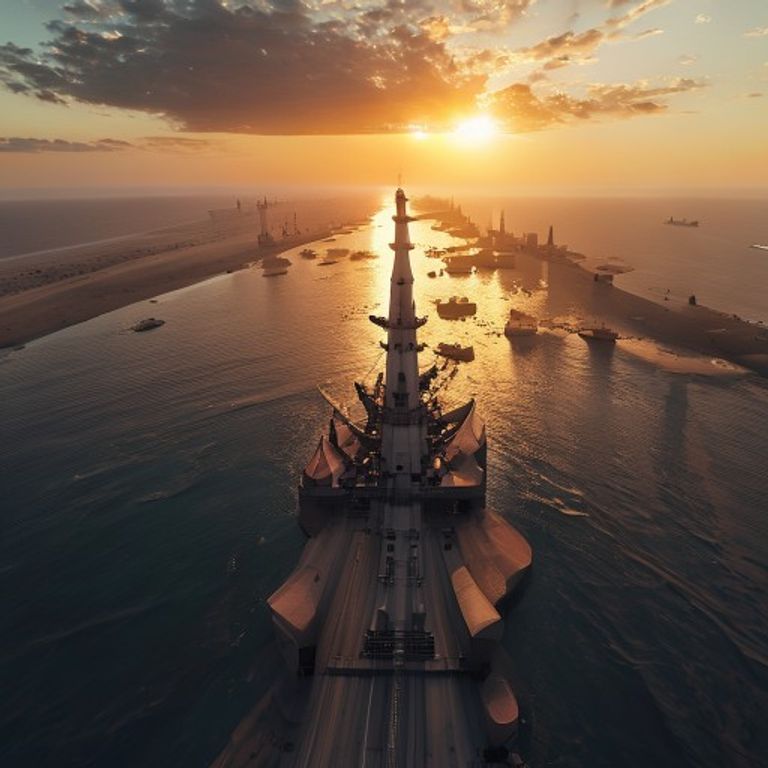
Introduction to Project Freedom
“Project Freedom” has become a focal point of international discussion after recent violence erupted in the strategic waterway known as the Strait of Hormuz. The initiative, announced by former President Donald J. Trump, promises United States assistance to guide and protect vessels that have become stranded amid rising regional tensions. While the announcement generated significant media attention, the exact mechanisms of the operation remain unclear, prompting a surge of speculation among analysts, policymakers, and commercial shipping operators.
Geopolitical Significance of the Strait of Hormuz
The Strait of Hormuz is one of the world’s most critical maritime chokepoints, linking the Persian Gulf with the Gulf of Oman and the broader Indian Ocean. Roughly one‑third of global oil consumption passes through this narrow passage, making any disruption a potential catalyst for worldwide economic instability. Nations that rely heavily on oil imports—particularly in Asia, Europe, and the United States—monitor the strait’s status closely. Historically, the region has witnessed a series of confrontations involving Iran, the United Arab Emirates, and external powers, each seeking to assert influence over the flow of energy resources.
Background: Why Project Freedom Was Initiated
In the months leading up to the announcement, several incidents heightened concerns about the safety of commercial vessels. Iranian naval forces conducted drills near shipping lanes, and a series of unexplained missile alerts caused a wave of precautionary rerouting by major carriers. Simultaneously, a number of tankers reported technical failures or seized navigation equipment, leaving them vulnerable to interception or accidental collisions.
President Trump’s administration framed Project Freedom as a proactive response to these challenges. The stated goal was to deploy U.S. naval assets capable of escorting and, if necessary, towing stranded vessels to safe harbors, thereby ensuring uninterrupted oil flow and protecting global trade interests.
Key Components of the Plan
While officials have withheld many operational specifics, the following elements are believed to form the core of Project Freedom:
- Naval Escort Units: Deployment of destroyers, frigates, and potentially aircraft carriers to patrol the strait and provide immediate response to emergencies.
- Maritime Coordination Center: An integrated command hub that synchronizes efforts between U.S. Navy vessels, regional allies, and commercial shipping companies.
- Rescue and Salvage Assets: Specialized tugboats, salvage ships, and unmanned surface vessels equipped with advanced towing capabilities.
- Intelligence Sharing: Real‑time exchange of satellite imagery, electronic surveillance, and threat assessments with partner nations such as the United Kingdom, France, and the United Arab Emirates.
- Rules of Engagement (ROE): Clarified protocols allowing U.S. forces to intervene defensively against hostile actions while avoiding escalation.
Immediate Aftermath: Violence on Monday
On the Monday following the announcement, an altercation broke out near the central shipping lane. Eyewitness accounts described a group of small, fast‑moving boats firing warning shots at a cargo vessel that appeared to be struggling with engine power. The incident quickly escalated when the vessel’s crew signaled distress, prompting the U.S. destroyer USS James E. Williams to intervene.
The U.S. ship approached the scene, broadcast a warning over maritime radio frequencies, and deployed a small rescue helicopter to assess the situation. According to a U.S. Navy spokesperson, the helicopter crew confirmed that the cargo vessel’s propulsion system had indeed failed, leaving it adrift. The destroyer then initiated a towing operation, securing a line to the stricken ship and moving it toward a designated safe zone outside the most congested part of the strait.
Despite the swift response, the incident resulted in a brief exchange of fire between the unidentified crafts and the U.S. escort, leading to injuries on both sides. International observers labeled the event a “dangerous flashpoint” that could have spiraled into a broader conflict if not for the timely intervention.
Reactions from Regional Actors
Iran: Tehran condemned the U.S. operation, labeling it a “violation of sovereign waters” and accusing Washington of using the incident as a pretext for increased military presence. Iranian officials called for an emergency meeting of the Gulf Cooperation Council (GCC) to discuss collective security measures.
Gulf Cooperation Council (GCC): Member states expressed mixed feelings. While the United Arab Emirates welcomed the added security, Saudi Arabia emphasized the need for diplomatic solutions and warned against unilateral actions that could destabilize the region.
Global Shipping Industry: Major carriers such as Maersk, Mediterranean Shipping Company (MSC), and CNOOC issued statements praising the rescue effort, noting that the rapid response averted a potential environmental disaster and saved valuable cargo.
Potential Economic Implications
The Strait of Hormuz handles an estimated 20 million barrels of oil per day. Any interruption can trigger price spikes on global oil markets, affect supply chains, and influence currency valuations. Analysts from Bloomberg and the International Energy Agency (IEA) projected that even a short‑term shutdown could push crude prices upward by $3‑$5 per barrel.
Project Freedom, if fully operational, could serve as a stabilizing factor by reducing the risk of prolonged disruptions. However, critics warn that a heavy U.S. naval footprint might provoke retaliatory measures, leading to insurance premiums for vessels transiting the strait to rise sharply.
Legal and International Law Considerations
Under the United Nations Convention on the Law of the Sea (UNCLOS), the strait is classified as an international strait used for navigation passage. All ships have the right of transit passage, and no state may impede that right. At the same time, coastal states like Iran retain limited rights to enforce laws concerning safety, pollution, and customs within their territorial waters.
The deployment of foreign warships to “guide” commercial vessels raises questions about the interpretation of “peaceful navigation” versus “military intervention.” Legal scholars argue that without a clear multilateral mandate, Project Freedom could be perceived as an infringement on Iran’s sovereign rights, potentially leading to disputes in international courts.
Future Outlook and Potential Scenarios
Experts outline three primary trajectories for Project Freedom and the broader security environment of the Strait of Hormuz:
- Successful Stabilization: If the United States and its allies can demonstrate consistent, non‑escalatory assistance, commercial confidence may return. Shipping lanes would remain open, oil prices could stabilize, and diplomatic channels might open for broader security arrangements.
- Escalation and Counter‑Measures: A perception of U.S. overreach could trigger Iranian counter‑actions, including the deployment of asymmetric naval forces, mining of key channels, or cyber‑attacks on navigation systems. This scenario would increase insurance costs, disrupt trade, and possibly draw other major powers into the dispute.
- Stalemate and Limited Impact: Partial implementation of Project Freedom—without clear rules of engagement or coordination with regional actors—might result in sporadic assistance, leaving many vessels vulnerable and the overall risk environment unchanged.
What Shipping Companies Can Do Now
In light of the evolving situation, shipping firms are advised to adopt a series of best practices:
- Maintain real‑time communication with maritime security providers and consult the Maritime Safety Information Service (MSIS) for up‑to‑date threat assessments.
- Review vessel insurance policies to ensure coverage for potential piracy, sabotage, or forced rerouting in the strait.
- Consider alternative routes, such as the Suez Canal or the Cape of Good Hope, for high‑value cargo, despite longer transit times.
- Invest in onboard equipment upgrades, including redundancies for propulsion and enhanced navigation electronics to reduce the likelihood of becoming stranded.
Conclusion
Project Freedom represents a decisive, albeit controversial, attempt by the United States to safeguard one of the world’s most vital maritime arteries. The initial incident on Monday highlighted both the potential benefits of rapid U.S. assistance and the inherent risks of heightened military involvement in a highly contested region.
Stakeholders—including governments, shipping operators, and international legal bodies—must navigate a delicate balance between security imperatives and respect for sovereign rights. The coming weeks and months will reveal whether Project Freedom can evolve into a stabilizing force or whether it will become another flashpoint that amplifies existing tensions in the Strait of Hormuz.